
Cee Squared Science
The Science of Teaching Physics
Finding the right tools and strategies to effectively teach physics is challenging! Should I lecture? How should I do labs? What if their math skills are weak? What if they bombed the last test? How do I know they’re even learning??
Luckily, there are researchers out there studying best practices for teaching and learning physics. As I learn these things myself and practice them in my own dual enrollment physics classroom, I want to share these evidence-based insights with you.
Not only that, but over 50% of physics teachers in the US did not major in physics! If that’s you, I want to help you build your content knowledge so you feel confident in your instruction.
Some thoughts from my blog…

Check out some resources I made for my classes!
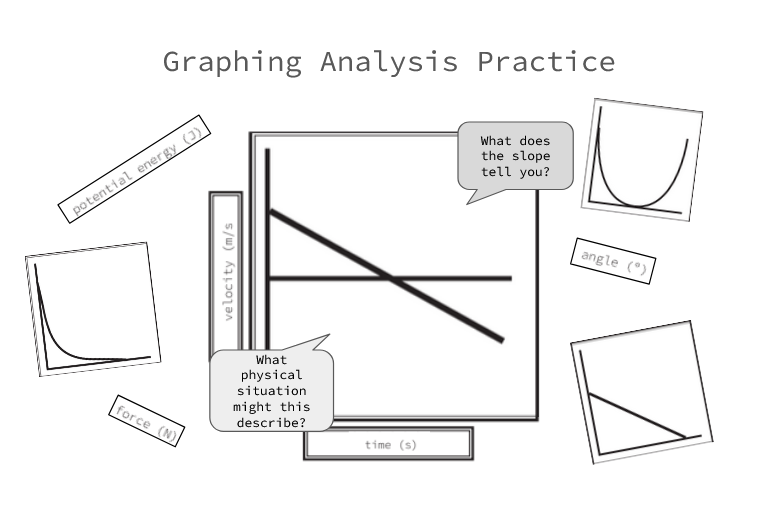
Drill your AP® Physics 1 students on graph analysis with this simple and versatile practice activity! This resource includes 21 graph sketches and 31 axis labels, designed to help students make meaningful connections between graph shapes, quantities, and physical concepts.
Here’s how it works: Students select a graph, choose a label for each axis, and analyze the graph using the provided guiding questions. Whether they're exploring the motion, energy, forces, or momentum of a system, this activity reinforces essential graph interpretation skills in a simple but engaging way.
Why You’ll Love This Resource
Adaptable for Any Setting: Use it as a whole-class activity, in small groups, or for independent practice. Perfect for bell work, review sessions, or stations.
Hands-On and Reusable: Students can cut out the graphs and labels to create their own personal sets for practice, or you can laminate a class set for repeated use.
Builds Critical Thinking: The guiding questions encourage students to analyze, interpret, and connect graph shapes to real-world scenarios, deepening their understanding of physics concepts.
What’s Included:
21 graph sketches with a variety of shapes to represent common relationships in physics.
31 axis labels for matching, covering quantities from all 8 units
Guiding questions to prompt deeper analysis and critical thinking.
AP® is a trademark registered by the College Board, which is not affiliated with, and does not endorse, this product or website.
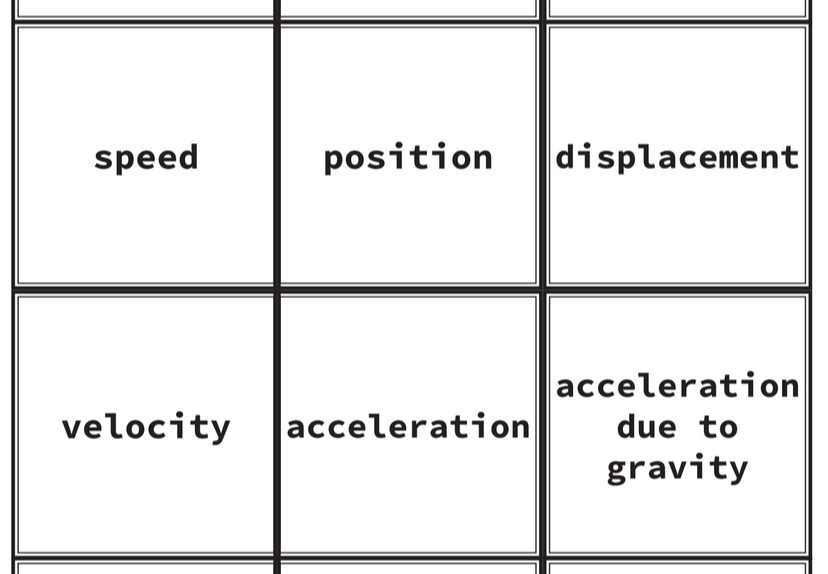
Find all my flashcard sets for ALL 8 UNITS of AP® Physics I in this bundle. Save by buying the bundle instead of buying each set individually!
Help your students solidify their knowledge of key vocabulary, variables, and equations with this set of simple yet effective flashcards.
Why do my AP® kids need flashcards?
How can students solve for displacement if they don’t know what that means? How can they derive an expression starting with the equation sheet if they don't know what the variables mean? By committing these foundational facts to long-term memory, your students can focus their mental energy on applying physics concepts rather than struggling to recall or look up definitions and variables.
With these flashcards, your students will build the essential knowledge they need to confidently tackle physics problems.
Why You’ll Love This Resource
Time-Saving: No prep required—just print, cut, and distribute (or let your students handle the cutting!).
Flexible Use: Perfect for individual review, partner practice, or engaging classroom games.
Building a Strong Foundation: Empower your students with the confidence to succeed by ensuring they know the basics.
AP® is a trademark registered by the College Board, which is not affiliated with, and does not endorse, this website or its products.
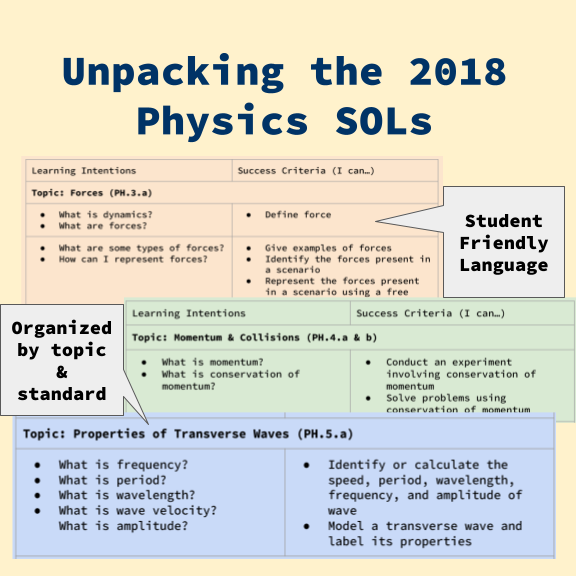
Streamline Your Planning with Student-Friendly Learning Objectives Aligned to the 2018 Virginia SOLs for Physics
Simplify your unit and lesson planning with this resource, designed to help you clearly articulate learning intentions (LIs) and success criteria (SCs) for every topic in your physics curriculum.
Decoding state standards and rewriting them in student-friendly language can be time-consuming and overwhelming. This resource does the heavy lifting for you! Each “Enduring Understanding” (LI) and “Essential Knowledge and Practice” (SC) from the 2018 Virginia Physics Curriculum Framework has been thoughtfully translated into language that students can easily understand.
Why You’ll Love This Resource
Save Time: Skip the tedious process of unpacking standards.
Focus on Teaching: Spend less time decoding jargon and more time teaching engaging lessons.
Aligned and Organized: Objectives are broken down by topic, ensuring full alignment with state requirements.
Improved Clarity: Empower your students with clear learning intentions that they can grasp and achieve and that you can easily assess.
This resource is perfect for new and experienced teachers alike, whether you’re refining your curriculum or creating lessons from scratch.
About Cee²
CeeCee is a dual enrollment physics teacher in Virginia. She studied physics at William & Mary then continued on to a Master’s of Arts in Science Ed. She taught 8th grade physical science before teaching standard physics and AP Physics I. She now teaches at a Governor’s School and is earning a Master’s in Science in Physical and Applied Sciences from Marshall University. She is passionate about physics pedagogy and curriculum design and believes that strong content knowledge goes hand in hand with strong pedagogical knowledge to make for effective instruction. She loves astronomy, is a Virginia Master Naturalist, and dabbles in crochet, knitting, and quilting.
Contact Cee
Have an idea for a resource or blog post? Noticed a typo? Want to talk about physics and/or teaching? Send me a message :)
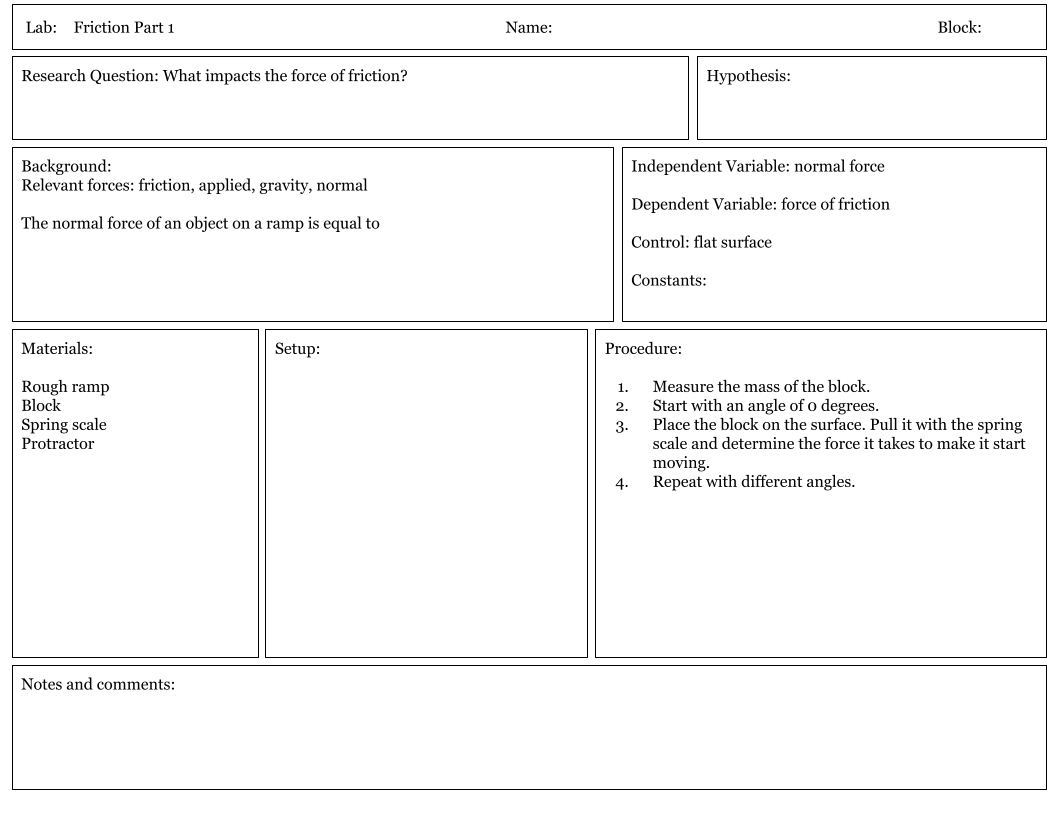
I spent some time thinking about the LAB FRQ, what it actually wants kids to do, how it relates to my labs, and how I can better prepare my students to tackle it.